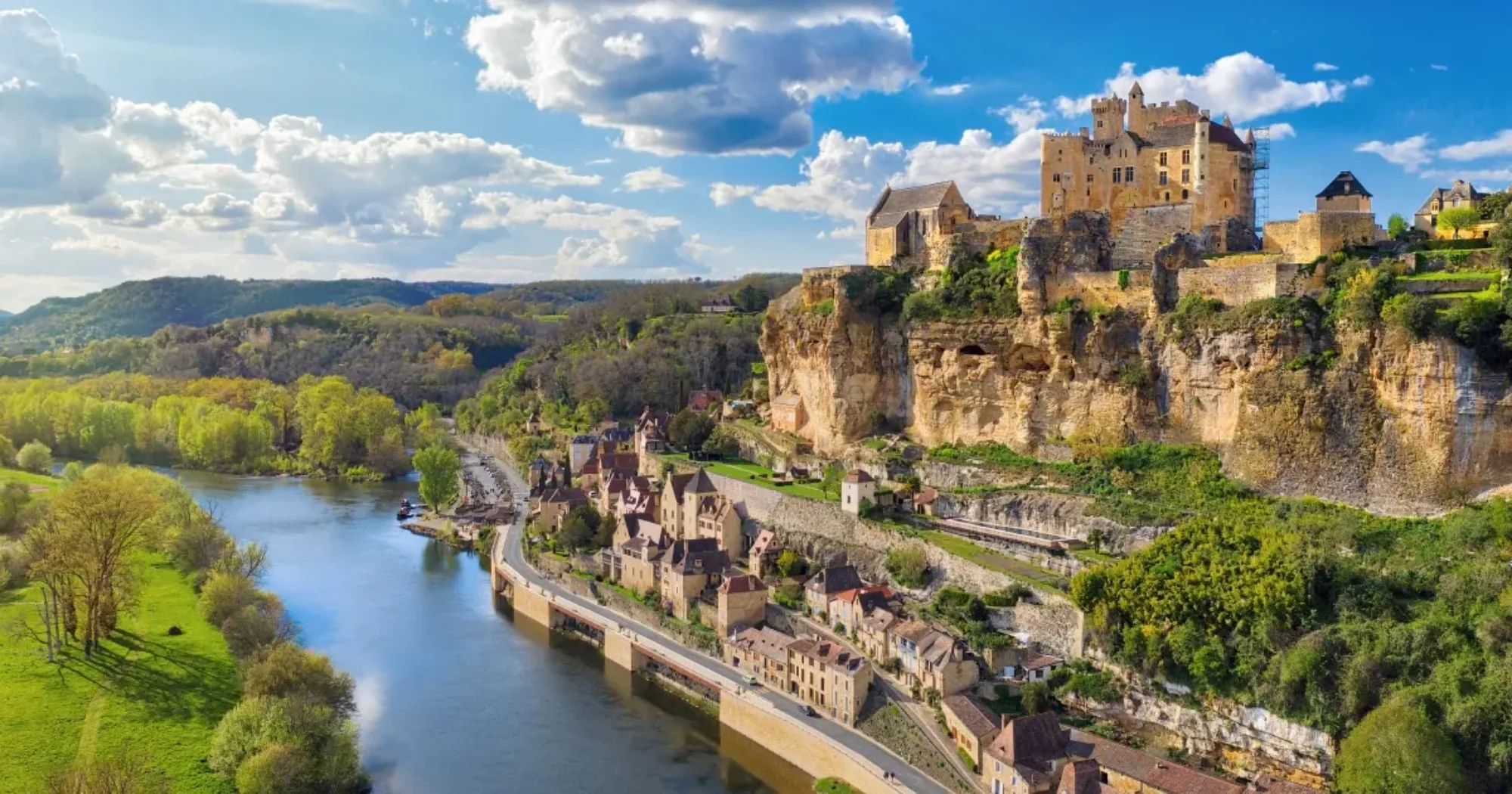
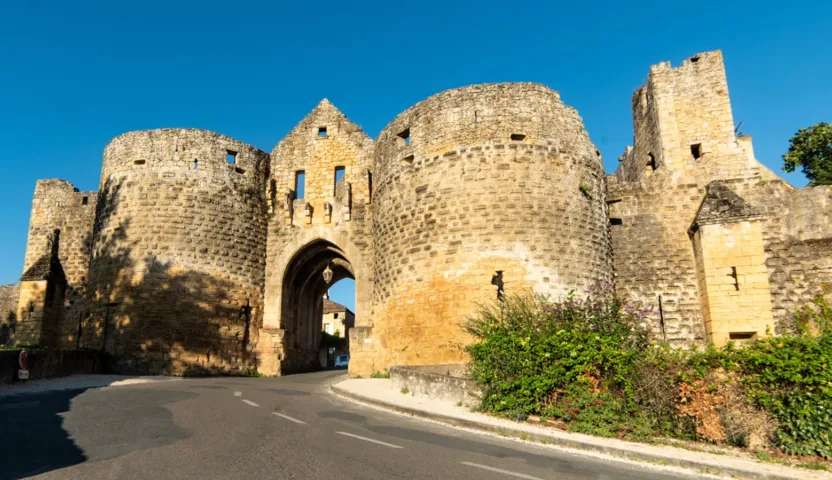
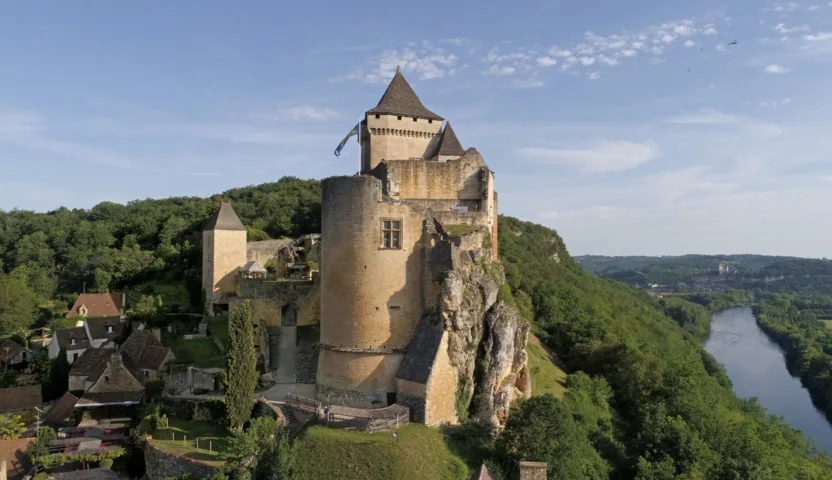
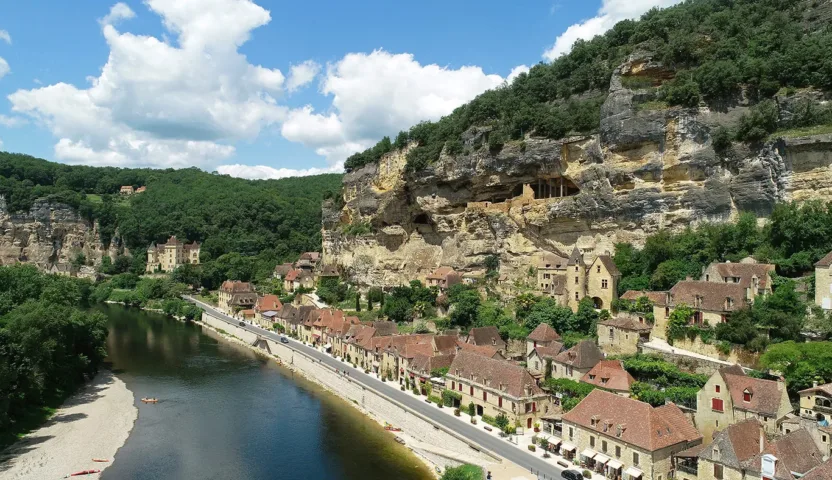
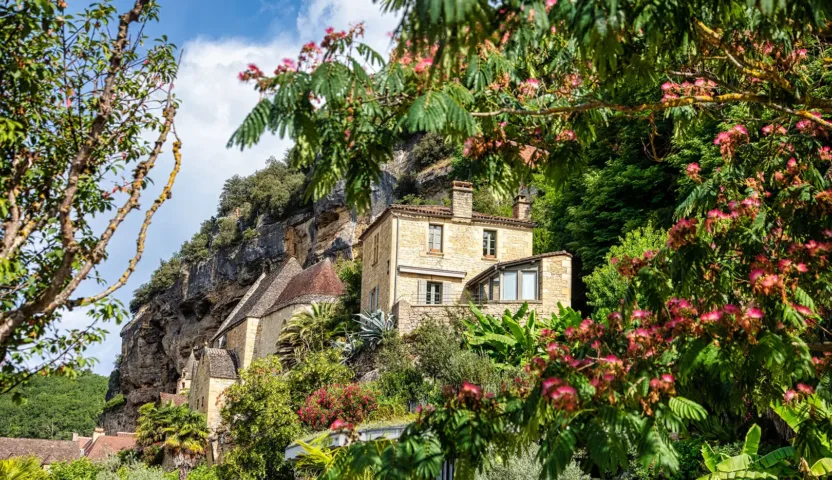
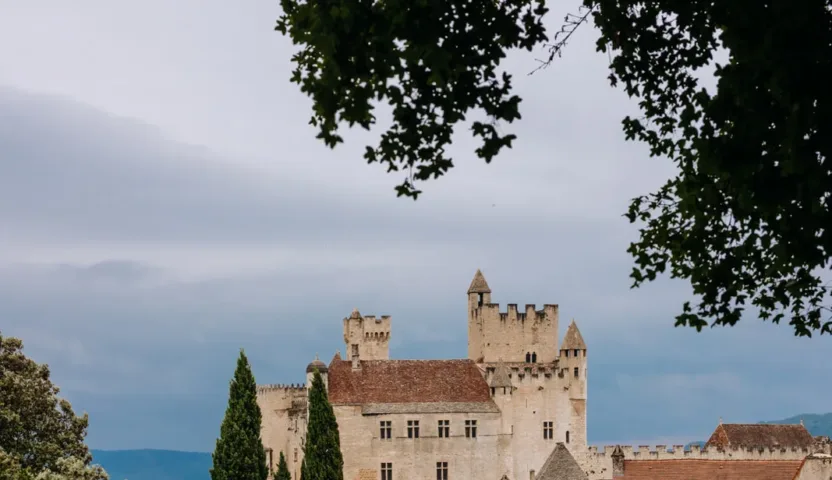
In the heart of the Périgord Noir, less than 7 km from ournature-oriented hotel in the Périgord NoiratSlow Village, discover theChâteau de Beynac—a designated historic monument—located in the town of Beynac-et-Cazenac.Beynac Castleis unique in that it isone of the fewmedieval castles in the Dordognethat is so well-preserved. Explore this castle, which seems to blend seamlessly with the limestone rock on which it stands and majestically overlooks the waters of the Dordogne, in which it is proudly reflected.
Thehistory of Château de Beynac
Beynac Castlewasbuilt by the Lord of Beynac in the 12th centuryon a rocky promontory overlooking the Dordogne Valley, in order to keep watch over the surrounding lands and the valley.
In 1194, Lord Ademar de Beynac died without a direct heir, and the castle passed to Richard the Lionheart, who was King of England, Duke of Normandy, and Duke of Aquitaine through his mother, Eleanor of Aquitaine. He gave Beynac to one of his most loyal companions, the knight Mercadier—who would be assassinated in Bordeaux in 1200—and the castle subsequently returned to the Barons of Beynac.
The respite would be short-lived, for in 1214, Simon de Montfort—who was at war with the Cathars—seized the castle and thereby gained control of lands loyal to the Count of Toulouse, a defender of the Cathars. The lords of Beynac who followed one another then consolidated their influence over the region.
During the Hundred Years' War, Beynac castle played an important role and became one of France's strongholds.
In the 15th century, Beynac became a barony that prospered and expanded, but in the 16th century, during the Wars of Religion, Beynac became a reformist and experienced poverty, and the peasants, known as "croquants", revolted. In the 17th century, calm returned and the Barony became a Marquisate, by the will of the King of France.
At the beginning of the 18th century, famine and misery led to an unprecedented uprising of the peasants, which was bloodily suppressed, and the split between the lords of Beynac and the village population began. After the childless death of the last heiress of the lords and barons of Beynac, Marie-Claude, in 1811, the Beynac line died out, 800 years after its birth.
Thearchitecture of Château de Beynac
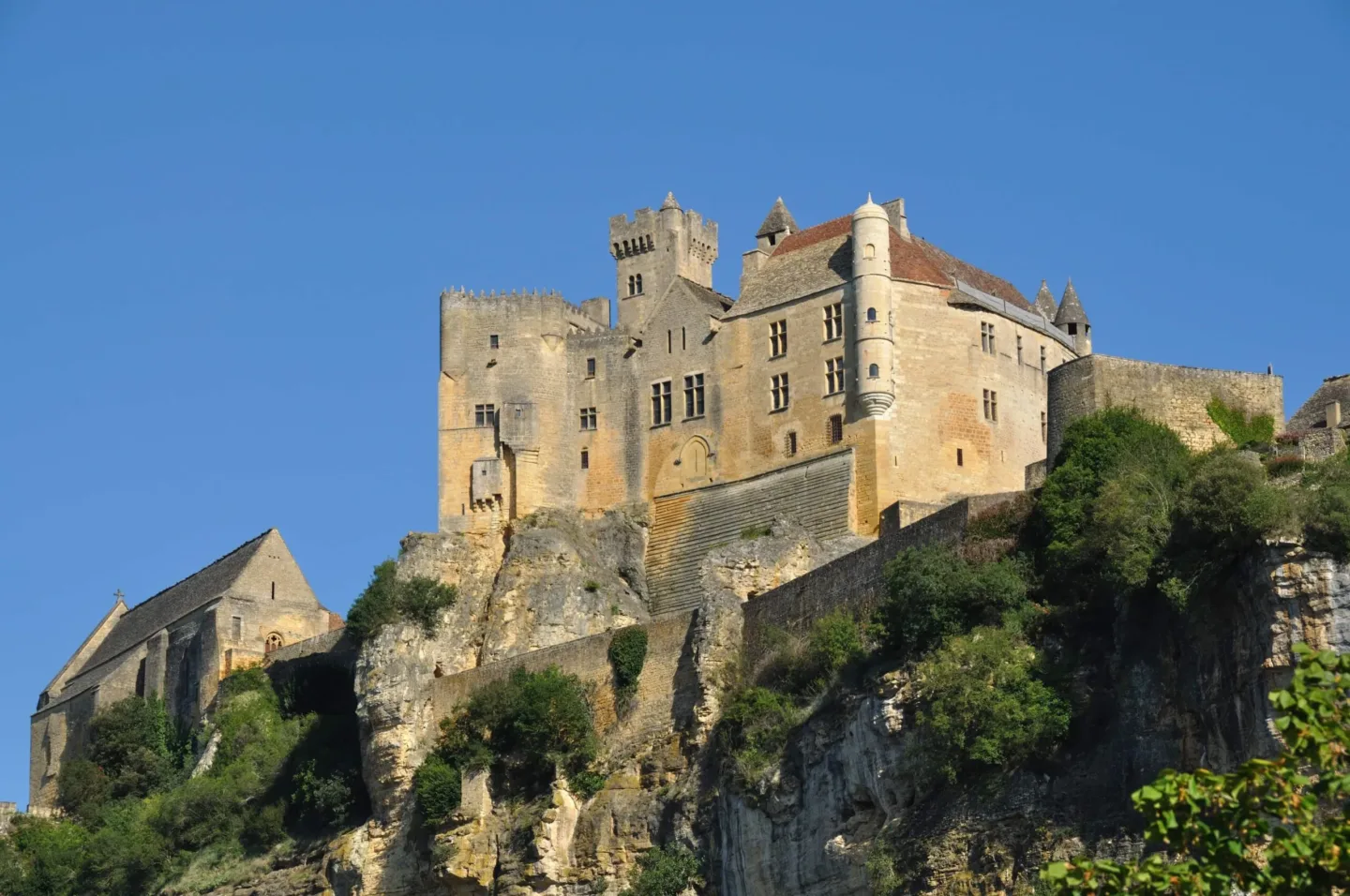
Château de Beynac is an austere medieval structure perched atop a limestone plateau. It takes the form of an irregular quadrilateral extended to the south by a bastion spur. Its cylindrical towers and ramparts offer panoramic views over the Dordogne River. Standing 152 meters high, it is a formidable and feared fortress, capable of withstanding multiple wars and invasions. Château de Beynac can be seen from other fortresses in the area, notably from Château de Castelnaud.
Preserving the Château de Beynac
Château de Beynac has undergone numerous restorations over the centuries to maintain its architectural and historical integrity. In 1961, Beynac was acquired by Lucien Grosso, a private collector with a passion for history. He embarked on a monumental restoration plan that would not be completed until 2060. Although he is no longer alive, his successor was obliged to continue the work in order to preserve this historic jewel for future generations, making it possible for tourists and history buffs alike to visit the site.
In fact, its preservation today makes it a popular movie set.