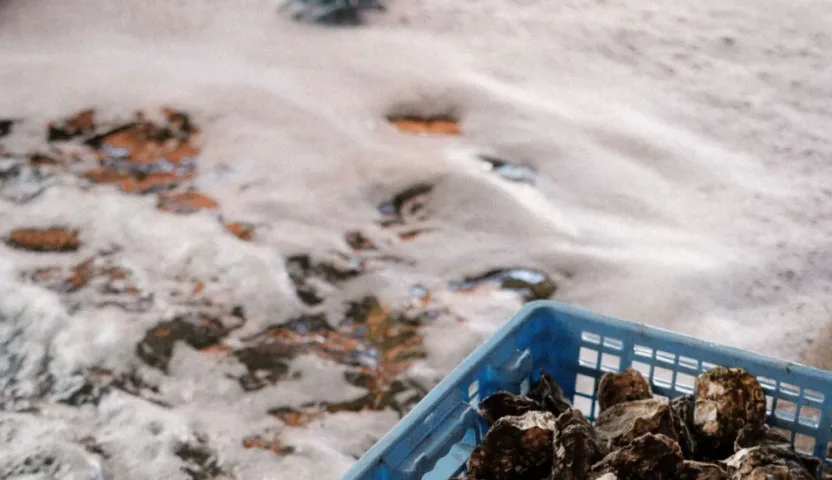
Ideally situated between land and sea, the salt marshes of Île de Ré perfectly embody the delicate balance between untamed nature and human labor. As you wander through these geometric landscapes shaped by clay, you leave behind the frenetic pace of daily life and enter a world of silence, broken only by the cries of seabirds and the lapping of the water. An immersive stroll through the heart of this island landscape promises total disconnection, where you can take the time to observe the magic of evaporation that gives birth to the island’s white gold.
Salt farming on the Ile de Ré
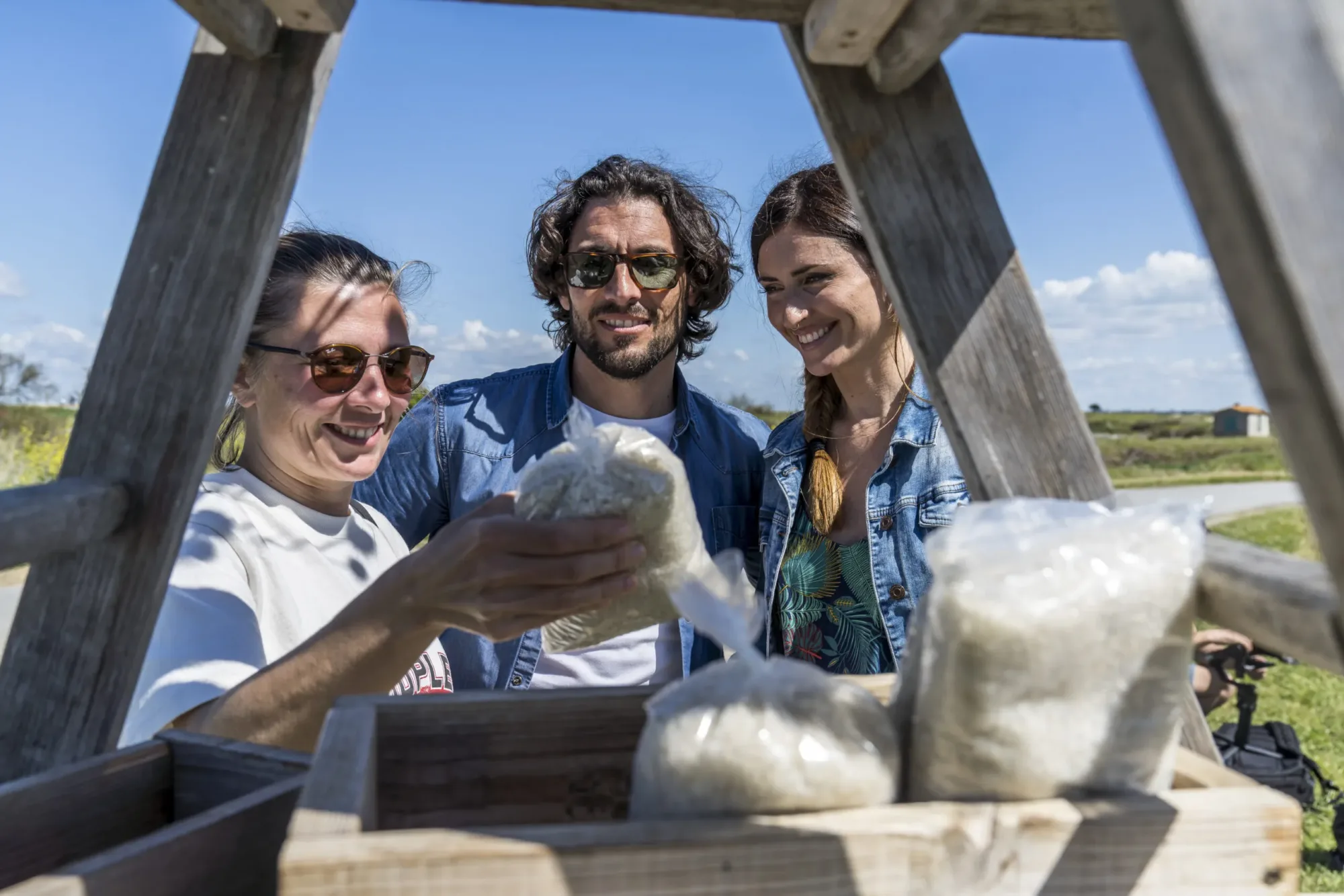
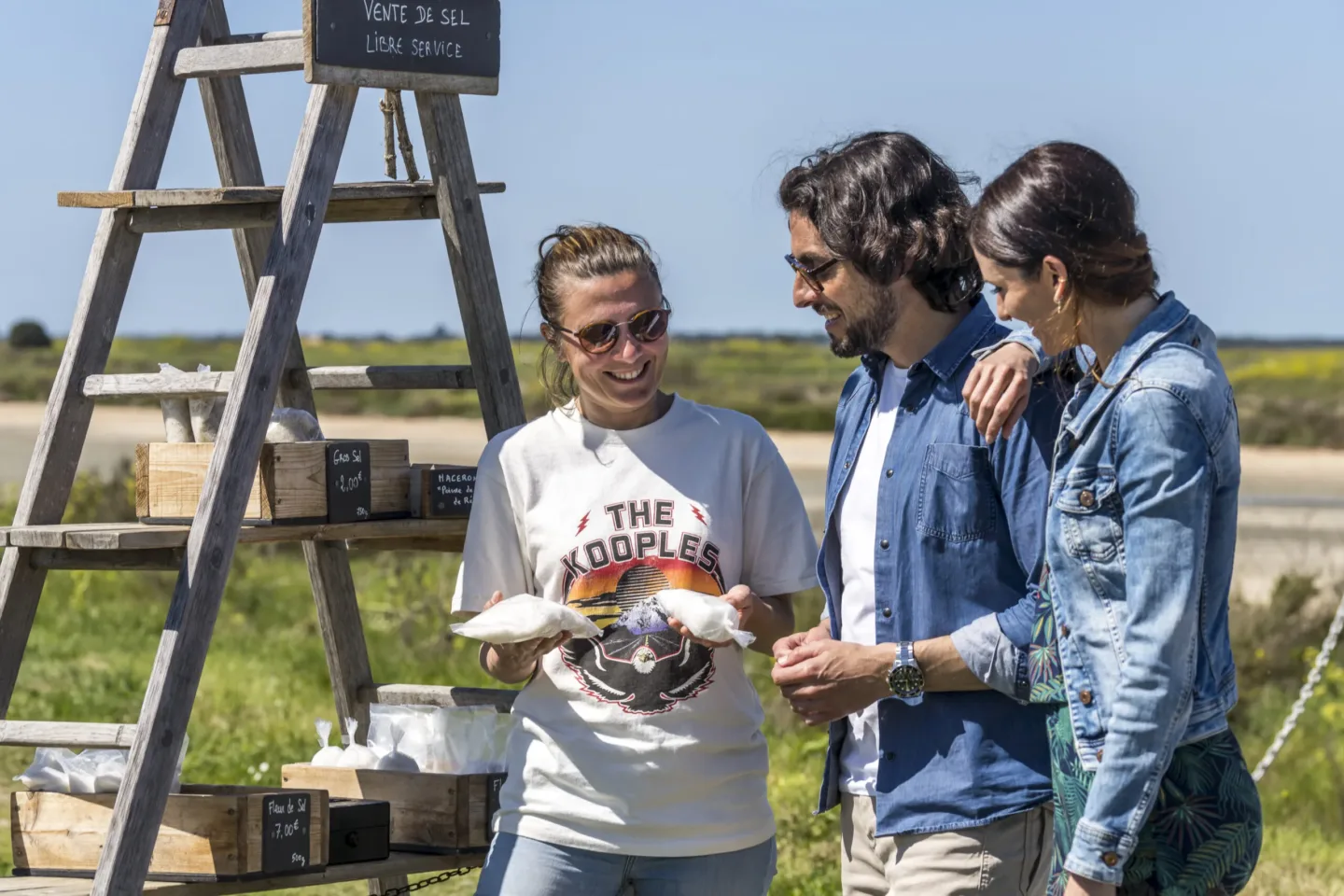
A historic tradition on the Ile de Ré, salt farming sustained the territory from the Middle Ages until the end of the 19ᵉ century. Gradually abandoned over the course of the 20ᵉ century, the salt pans gave way to the marshes and mudflats that form the Lilleau des Niges nature reserve, and are home to precious populations of migratory birds. For some years now, the younger generation has been reviving the tradition of salt cultivation, and salt pans have been re-opening in the Retais region. The trade is now readily shared with the public, through salt-pan tours, tastings and salt-harvesting demonstrations. In the heart of the maze of marshes, on the banks of the Fier d'Ars, the salt marsh eco-museum invites vacationers discovering the island to delve into the history of this ancestral culture. Retais salt and its by-products are an original idea for a gift to bring back to your loved ones at the end of your camping holiday on the Ile de Ré. Be sure to visit the sauniers' cooperative for a wide selection of products, gift boxes and souvenirs!
Salines de Loix and salt marsh ecomuseum
The salt marsh ecomuseum is located on the Loix salt marshes: a visit to the salt marshes is an opportunity to discover the secrets of the salt worker's trade, as well as to observe the avifauna that live in the marshes. A nature outing par excellence, a visit to the Loix salt marshes and ecomuseum is a complete family activity, combining the discovery of a centuries-old craft, the history of the island, local culture and gourmet delights. Open from mid-February to mid-November, the museum features an exhibition on the history of the salt marshes and salt production techniques. A scale model explains how the marshes and their various basins work. The second part of the visit takes place outdoors, to discover the marsh flora (samphire, mustard and statis), and its specific fauna: egrets, geese, shelducks, depending on the season. There's also a store offering information for children and adults alike, as well as flavored salt, fleur de sel, caramels and jars of samphire. The eco-museum is just 11 km from the Slow Village campsite. The perfect opportunity bike ride along the Loire !