Breizh Légendes

Moguériec Lighthouse: The History of the Lighthouse Designed by Gustave Eiffel

Written by Hugo
Oct. 20, 2026
Moguériec Lighthouse: The History of the Lighthouse Designed by Gustave Eiffel
Destinations
Choose your next getaway

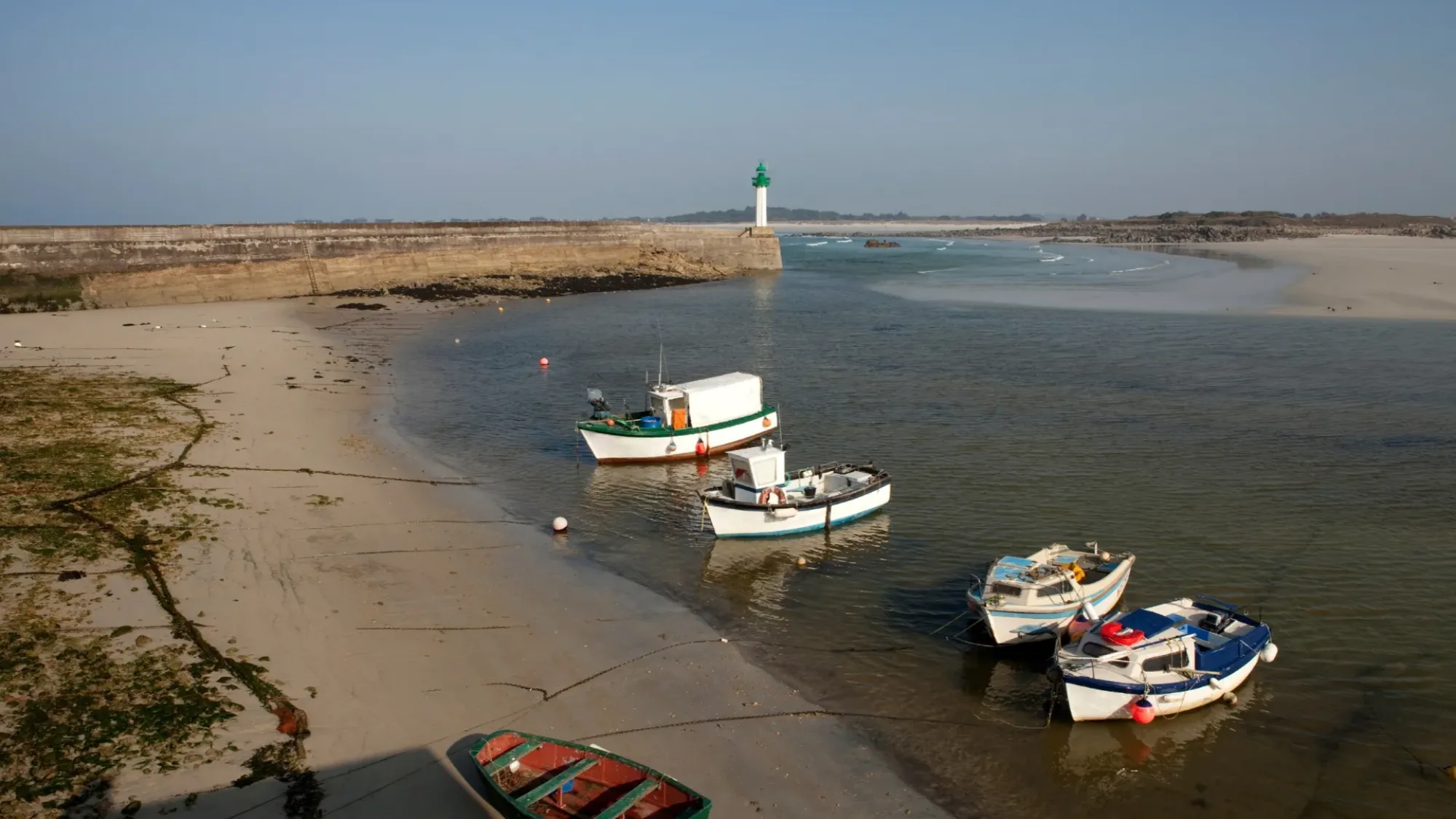
The Moguériec Lighthouse is one of the few metal lighthouses designed by Gustave Eiffel that are still standing in France. Located at the end of the pier in the small fishing port of Moguériec, in Sibiril in northern Finistère, it was first used in Honfleur before being moved to Brittany in 1960, where it was then fully restored. The port is about a 30-minute drive from Slow Village Breizh Légendes, on the Côte des Légendes, making it an easy day trip during a stay in Brittany.

What is the history of the Moguériec lighthouse?

The Moguériec Lighthouse was not built for Moguériec. It is a secondhand lighthouse, manufactured in the Paris region, installed in Normandy, and then moved to Brittany nearly ninety years later.

A lighthouse built in a workshop and then shipped down the Seine

The lighthouse was built in Levallois-Perret, in workshops associated with Gustave Eiffel, in partnership with the industrialist Louis Sautter. In August 1876, it was transported down the Seine to the port of Honfleur, where it was installed at the end of the western pier.

From Honfleur to Moguériec

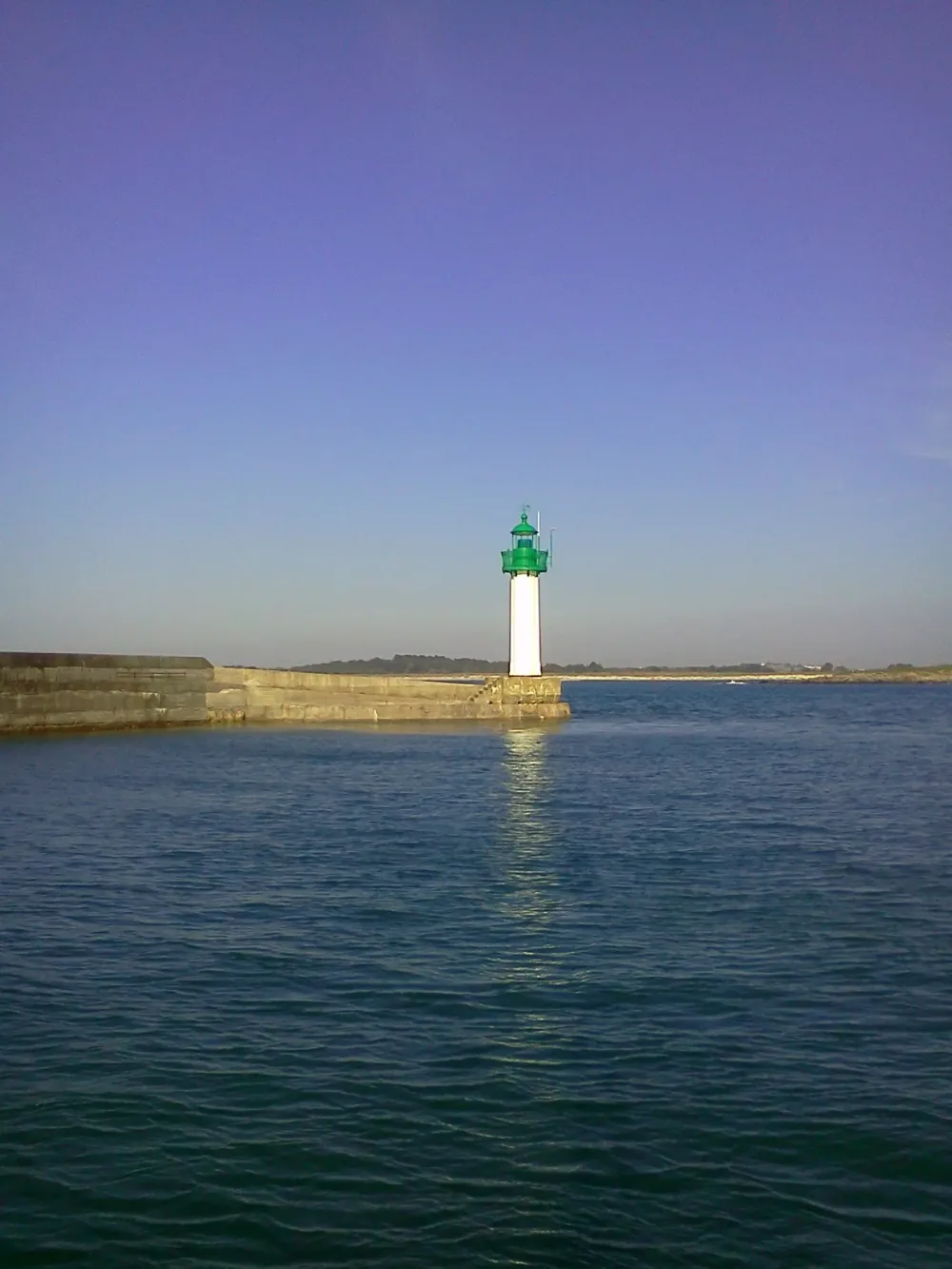
During World War II, in June 1940, the lighthouse was struck by a German shell that failed to explode. It was dismantled in August 1948 and transported to Le Havre. In 1960, it was purchased by fishermen from Moguériec who had been calling for a lighthouse for their port, and installed in Sibiril following port development work. Painted white and green, standing about 10 meters tall and weighing 7.5 metric tons, it has become the port’s emblem.

Moguériec, a fishing port at the far end of Sieck Bay

Moguériec is a small port on the Léon coast, at the far end of the bay ofSieck Island, about 4 miles southwest of the entrance to the channel leading to Batz Island. Gallo-Roman ruins indicate that the site was already used as a port in ancient times. The current breakwater, which had been requested since 1881, was not built until 1903 and 1904, funded by the mayor of Sibiril at the time, Henri de l’Estang du Rusquec. The name is said to derive from the Breton “Moguer Hiek,” meaning “Hiek’s wall,” named after a monk who came from Ireland in the 6th century.

Who designed the Moguériec lighthouse?

The lighthouse was designed based on a plan by Gustave Eiffel and Louis Sautter, an engineer with the Bureau des Arts et Manufactures. The two men filed a patent for a new type of metal lighthouse, whose structure consisted of rigid rings connected by metal beams. This method made it possible to manufacture the lighthouse in a workshop, transport it in sections, and assemble it quickly on site.

A red lighthouse of the same model still stands on the pier of the old port of Menton, in the Alpes-Maritimes. For an academic paper, comparing these two examples offers a good perspective on the mass production of lighthouses in the 19th century.

When did the Moguériec lighthouse begin operating?

The lighthouse did not have a single inauguration; it was put into service on several successive occasions.

  • August 1876: Installation and commissioning in Honfleur
  • June 1940: Hit by a shell that failed to explode
  • August 1948: Dismantling and transfer to Le Havre
  • 1960: Moved to Moguériec, at the end of the pier
  • September 2021: Dismantling for restoration
  • April 2023: Return to Moguériec after restoration

What is the historical role of the Moguériec lighthouse?

The lighthouse serves as a harbor entrance light. To enter Moguériec, sailors followthe line formed by the light at sea, at the end of the pier, and a light on land, along a 162° axis . The harbor is accessible starting three hours after low tide, depending on the draft, and it is navigable at night.

The lighthouse stands watch over a fishing fleet whose activities have changed significantly. In the early 20th century, Moguériec was renowned for its spiny lobster and rock lobster fishing, with regular deliveries to the Roscoff fish market. Today, the port is home to trap and net fishermen who primarily catch edible crabs, spider crabs, and coastal fish, which are sold at the Roscoff fish market.

What efforts have been made to preserve the Moguériec lighthouse?

The lighthouse nearly disappeared. In 2018, the Interregional Directorate for the North Atlantic and Western English Channel was considering decommissioning and dismantling it. At the request of the association “Save the Moguériec Lighthouse,” this project was put on hold for two years.

The association then secured an agreement to have the Sibiril town hall take over management of the lighthouse—with the Lighthouse and Beacon Authority retaining ownership—and raised the €540,000 needed for its restoration. The structure, which was heavily rusted and had holes in places, was dismantled by the Brest branch of the Phares et Balises agency and then restored by Crézé, a company in Saint-Jacques-de-la-Lande that specializes in artistic metalwork. The lighthouse was fitted with a new outer shell made of marine-grade 316L stainless steel, and nearly 800 rivets were replaced.

After being returned to Sibiril by road on April 14, 2023, it was reinstalled at the end of the pier on April 21, 2023, by the Armorique, a buoy-laying vessel from the Lighthouse and Buoy Service. The operation was scheduled for a day with a tidal coefficient of 100, which was necessary for lifting the shaft from the sea.

Visiting the Moguériec Lighthouse: Practical Tips

Directions and the best time to visit

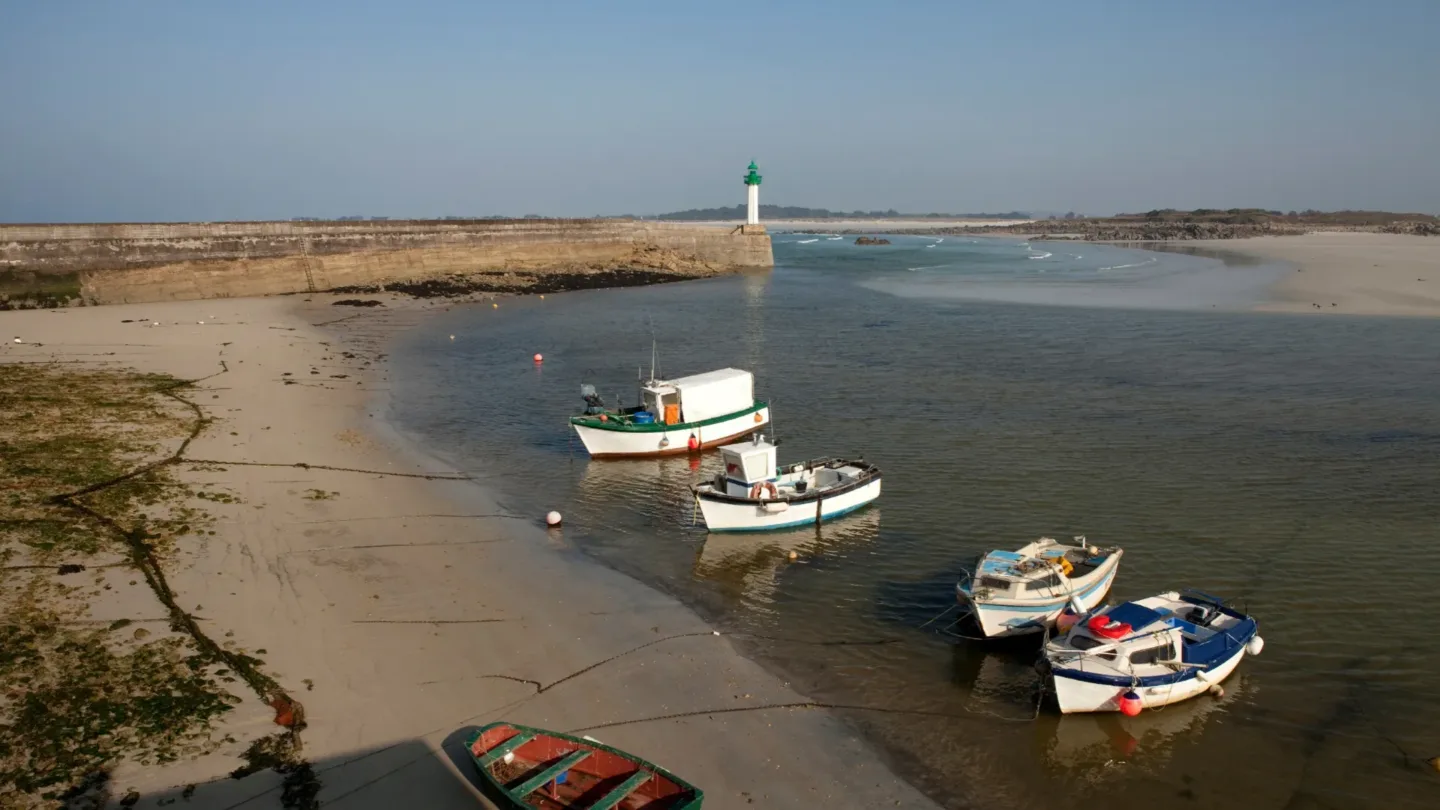
You can’t go inside the lighthouse, but it’s clearly visible from the pier and the area around the harbor. It’s best to visit at high tide: the lighthouse is then surrounded by water, and the boats are afloat. At low tide, part of the harbor dries up, allowing you to see the pier and the rocky seabed.

The area also attracts surfers, and the GR34 coastal trail runs along the Sibiril coast. Since 2005, the port has hosted the World Periwinkle Spitting Championship, traditionally held on the first Sunday in August.

Things to See Around the Harbor

Sieck Island closes off the bay to the north. In July and August, trips to Batz Island are offered from the port on fixed dates and by reservation: a 45-minute guided cruise or a 25-minute direct crossing. The rest of the year, the crossing departs from Roscoff, a few kilometers away. To visit other lighthouses in the area, check out our guide to the Northern Finistère Lighthouse Route.

The Moguériec Lighthouse is neither the tallest nor the oldest in Brittany, but its history is unique: designed by Eiffel and Sautter, originally installed in Honfleur, purchased by fishermen, saved from demolition, and then restored thanks to local efforts. To see it, plan your visit during high tide and combine it with a trip to Sieck Island, Roscoff, or the Côte des Légendes, home to the Slow Village Breizh Légendes.


Things to Do in Brittany: The Most Beautiful Places and Activities

Breizh Légendes

Top 10 beaches in Finistère

Looking for white sand, turquoise water and wild horizons? Head for Finistère to discover the most beautiful beaches in Brittany. From north to south, secret coves, surf spots and spectacular landscapes await you just a stone's throw from our Slow Village Breizh Légendes. Follow our top 10 for a summer with your feet in the water, between unspoilt nature and an iodine-filled escape.

Alexandra
Breizh Légendes

Our favourite cycling routes in North Finistère

Looking for a gentle escape on two wheels? North Finistère is packed with cycle routes between sea and countryside, perfect for immersing yourself in authentic Brittany, whether solo, with family or friends.

Léa
Breizh Légendes

Île Vierge and its lighthouse

Do you love wide open spaces and the feeling of being alone in the world? Then set course for Ile Vierge in Plouguerneau in North Finistère, a charming islet that will brighten up your stay at the Slow Village Breizh Légendes campsite.

Charlotte
Breizh Légendes

GR34, the Douaniers trail

2,000 km of happiness facing the ocean: the GR34 is the ideal companion for your active or contemplative vacation. Between giant granite rocks and turquoise waters, explore the wild coastline of northern Finistère. Good news: the trail passes right in front of the Slow Village!

Hugo
Breizh Légendes

Taste Breton specialties

Discovering specialties in Brittany Pancakes, galettes, seafood, cider, salted butter caramel, big ha farz, lobster, scallops, cookies, fleur de sel... set out to conquer the sweet and savoury specialities of Brittany!

Charlotte
Breizh Légendes

Sand Sailing in Brittany: Spots, Beginner's Guide, and Practical Tips

The most popular activity on the vast beaches of the Atlantic and the English Channel, sand yachting is an experience you won’t want to miss during your stay in Brittany. Powered solely by the wind, learn to master the elements and get your fill of thrills as you glide just above the sand along the most beautiful natural areas of the Breton coastline.

Hugo
Breizh Légendes

Pontusval lighthouse at Brignognan-Plage

The Pontusval lighthouse in Brittany is a symbol of hope and safety for sailors and ships navigating the waters off the west coast of France. Located at the tip of Beg-Pol, in the commune of Plounéour-Brignogan-Plages, this majestic lighthouse stands as a symbol of maritime tradition and navigation. Founded in 1868, the lighthouse has been guiding sailors to port for over 150 years, and remains one of the most beautiful lighthouses in Brittany.

Charlotte
Breizh Légendes

Île Vierge beach in Crozon: a wild cove with turquoise waters

Nestled at the foot of the cliffs of the Crozon peninsula, Île Vierge beach reveals itself after a well-deserved walk. A wild cove with turquoise waters, where silence, rocks, and the sea offer a timeless escape in Finistère.

Charlotte
Breizh Légendes

Kayaking in Northern Finistère: A Guide to the Best Spots, Routes, and Rental Tips

Paddling along the abers or past the granite islets of the Finistère coast offers an exceptional view of Brittany’s natural heritage. Whether by sea kayak or stand-up paddleboard, set out on a guided tour or rent equipment to explore the crystal-clear waters and seascapes of Northern Finistère on your own.

Hugo